SPF Every Day: UV Protection Guide for EMEA Skincare
Cloudy London mornings and blazing Riyadh afternoons both demand sunscreen. Learn how much to apply, which filters work for your skin, and how to reapply without ruining makeup.

UV Does Not Take Days Off — Even in Cloudy Cities
If you live in Manchester, Munich, or Milan, you still accumulate ultraviolet exposure on overcast days. Up to 80% of UVA can penetrate cloud cover. In Nairobi, Accra, and Cairo, UV indices regularly hit extreme levels year-round. Daily SPF is the single most evidence-backed step to reduce premature wrinkles, dark spots, and skin cancer risk across every tone on the Fitzpatrick scale.
Think of sunscreen as infrastructure, not a beach accessory. Commuting, school runs, balcony coffee, and driving all add exposure — UVA passes through many car windows.
How Much Sunscreen to Apply
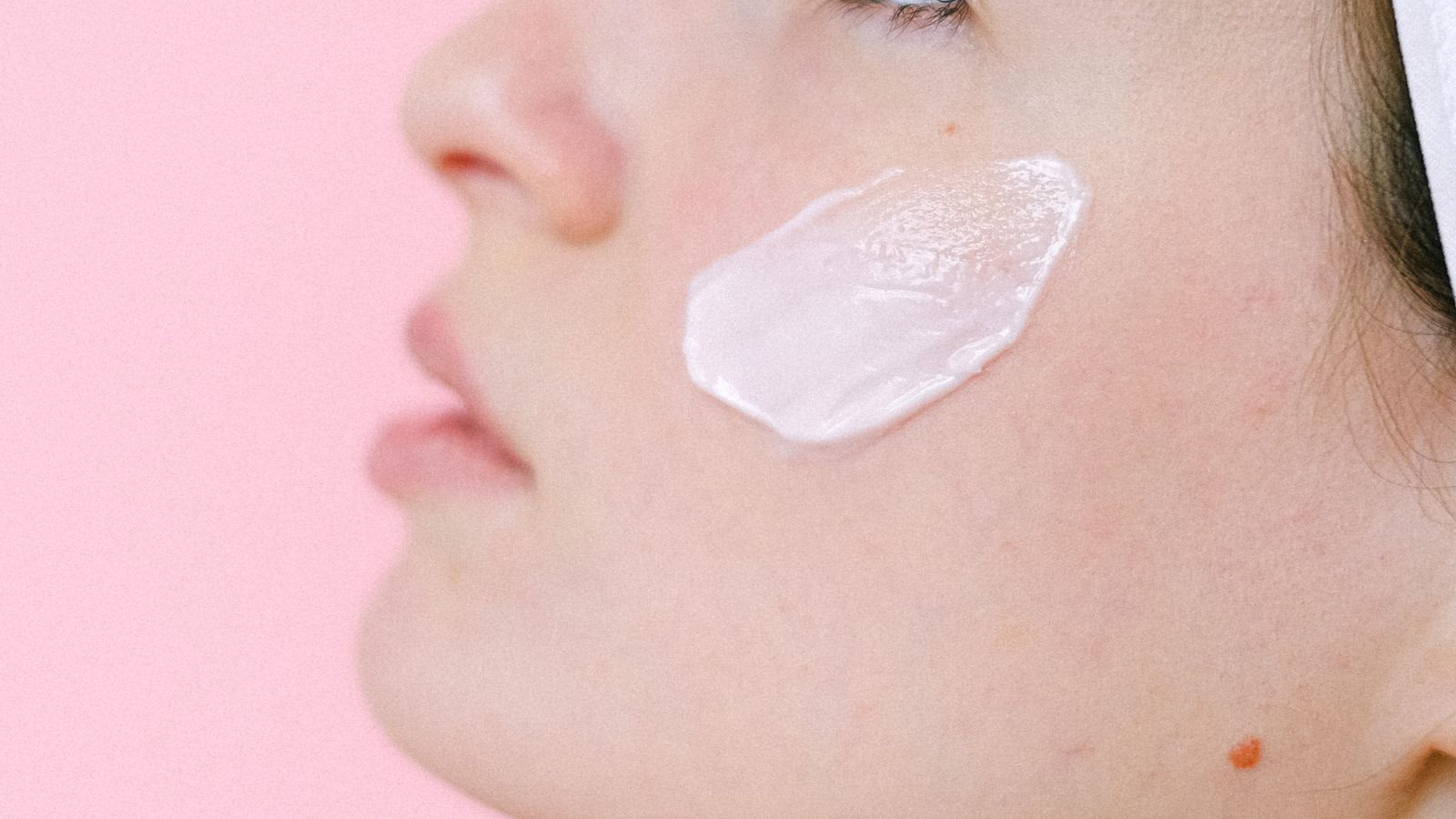
The teaspoon rule helps: roughly one quarter teaspoon for face and neck, two fingers' length for each arm, and a shot-glass amount for full body at the beach. Most people apply 25–50% of the tested dose, which slashes real-world protection. Use our BMI and wellness tools hub alongside habit trackers — consistency matters as much as body metrics for long-term health.
Chemical, Mineral, or Hybrid Filters?
Mineral (zinc oxide, titanium dioxide) sits on skin and reflects UV. Often preferred for sensitive or post-procedure skin; can leave a cast on deep skin tones unless tinted formulas are used.
Organic/chemical filters absorb UV and convert it to heat. Modern European filters like Tinosorb S and Uvinul A Plus offer excellent UVA coverage in many EU-formulated products available in Nigeria and Kenya via reputable importers.
Hybrids combine both for texture and protection. In the Gulf, lightweight hybrid fluids work well under abayas and outdoor work. In France and Spain, pharmacy brands often lead on photostable combinations.
Check labels for broad spectrum and SPF 30 minimum (SPF 50 for extended outdoor sport). PA++++ or UVA circle logos indicate strong long-wave protection — critical for pigment prevention in Morocco, Turkey, and South Africa.
Reapplication Without the Hassle
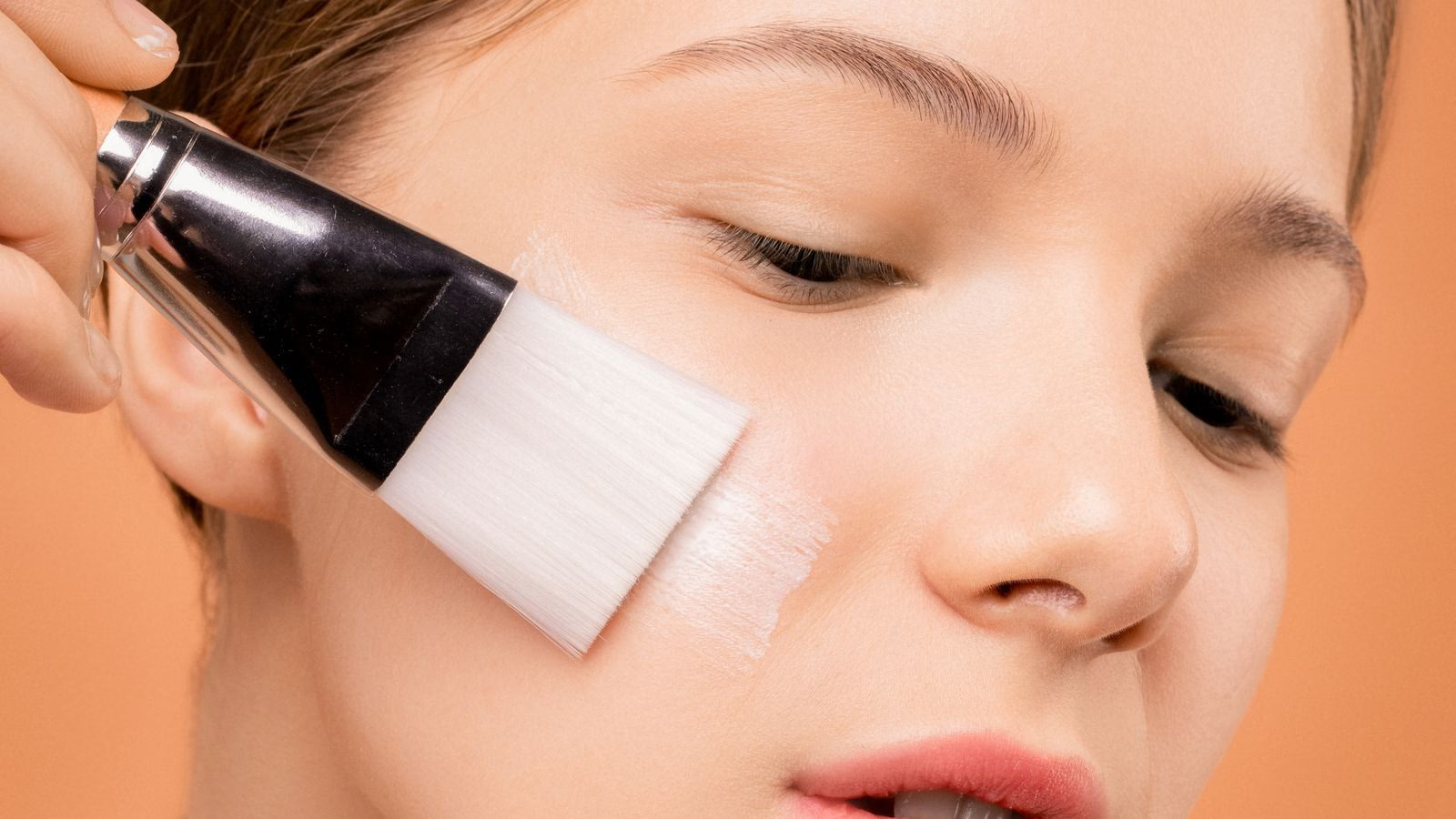
Sunscreen breaks down with sweat, friction, and time. Every two hours outdoors is the gold standard; every three to four hours indoors near windows is reasonable. Options:
- Cushion compacts with SPF for touch-ups over makeup
- SPF powders (use as supplement, not sole protection)
- Tinted fluids in pocket-size bottles for men and women in corporate dress codes from Lagos to Zurich
SPF for Darker Skin Tones
Melanin provides some natural protection but does not eliminate skin cancer or hyperpigmentation risk. Post-acne marks darken faster with unprotected UV — a common concern for readers in West Africa and the Middle East. Tinted mineral sunscreens and clear chemical gels reduce the grey cast issue. Patch test to avoid breakouts from heavy silicones.
Workplace and Cultural Considerations
Outdoor construction, hospitality, and delivery roles across the UAE and Egypt need practical formats: stick sunscreens for ears and nose, wide-brim options where dress codes allow, and employer awareness of heat stress plus UV. Ramadan schedules shift outdoor activity to evening — still use SPF if you walk before sunset; UV remains significant.
Pair SPF With the Rest of Your Routine
Apply sunscreen as the last skincare step before makeup. Wait two minutes before foundation. At night, cleanse thoroughly — water-resistant formulas need proper removal. Combine daily UV defence with Mediterranean skincare basics and seasonal barrier repair in European winters via our winter dry skin guide.
Myths Worth Ignoring
You do not need SPF indoors away from windows — partial truth; desk-by-window workers need it. Makeup with SPF alone rarely suffices unless you apply makeup at sunscreen thickness. Dark skin does not need sunscreen — false. Higher SPF means you can skip reapplication — false; reapply based on exposure, not number on the bottle.
Daily SPF is boring, affordable, and high return. Pick a texture you will actually use, buy a backup tube, and keep one in your bag. Future skin will thank you.
SPF Under Makeup and Sport Hijab
Gulf readers often ask whether sunscreen fits under breathable sport hijabs used for outdoor walking groups in Riyadh parks. Yes — apply to face, ears, and neck before covering; reapply at lunch if you remove hijab privately indoors. For makeup wearers in Milan or Dubai offices, SPF-primer hybrids work; still use dedicated sunscreen beneath for adequate dose.
Runners in Johannesburg and Nairobi should choose sweat-resistant labels and reapply on long Sunday group runs. Cyclists in Amsterdam commute with SPF on face and backs of hands — UV ages hands visibly over decades of handlebar grip.
Regulatory Labels Across Markets
EU sunscreens display UVA circle or PA alongside SPF. UK post-Brexit largely mirrors former EU standards on many imports. Middle East markets may import Asian, European, and US products side by side — filter names differ; oxybenzone controversy drives some consumers toward mineral-only formulas for reef and skin sensitivity reasons, though coral reef relevance matters less in Mediterranean holiday contexts than in Southeast Asia dive trips.
Topics covered
- SPF
- sunscreen
- UV protection
- EMEA
- anti-ageing
Frequently Asked Questions
Do I need sunscreen every day in Northern Europe?
Yes. UVA — the ageing and pigmentation wavelength — passes through clouds and glass year-round. Dermatologists across the UK, Germany, and Scandinavia recommend daily SPF on face, neck, and hands even in winter, especially if you sit near windows or drive regularly.
What SPF level is recommended in the EU and Middle East?
Use at least SPF 30 with broad UVA protection (look for the UVA circle logo in the EU or PA++++ in many Asian-import brands sold in the Gulf). In the UAE, Saudi Arabia, and North Africa, reapply every two hours outdoors and after swimming or heavy sweating.
How much sunscreen should I apply to my face?
About two finger-lengths of product for face and neck, or roughly ½ teaspoon. Most people under-apply, which cuts real protection to SPF 10–15. Apply as the last skincare step before makeup, and use a separate body formula for arms and décolletage.
Does makeup with SPF replace a dedicated sunscreen?
No. You rarely apply enough foundation or powder to reach the labelled SPF. Treat SPF makeup as a bonus layer; a dedicated broad-spectrum sunscreen underneath remains essential.
Are mineral or chemical sunscreens better for sensitive skin?
Mineral filters (zinc oxide, titanium dioxide) suit reactive or rosacea-prone skin and are often preferred around the Mediterranean for children. Modern chemical and hybrid EU-formulated filters offer lighter textures for oily skin and meet strict European safety assessments — choose based on finish, reapplication habit, and how your skin reacts.